
Why Line Management Can Make or Break Your Event

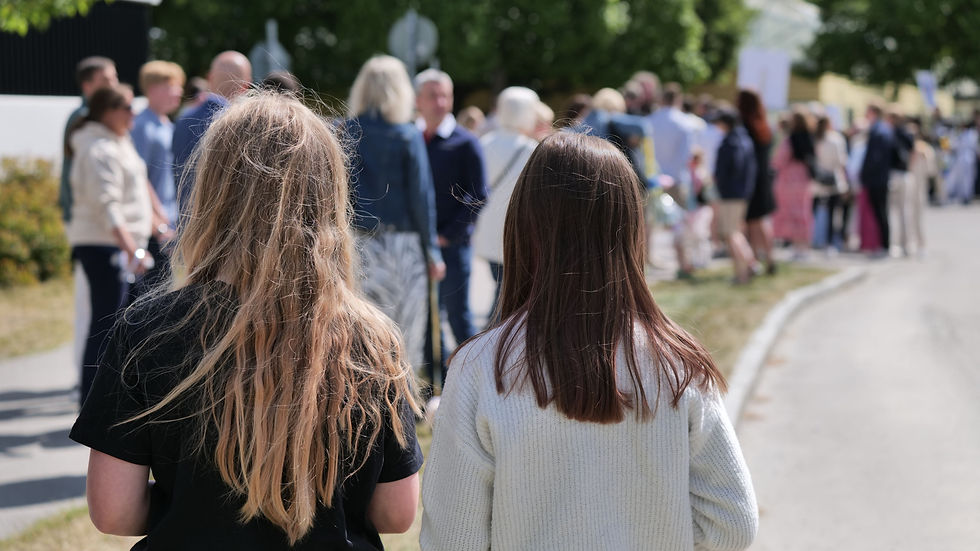
If you’ve ever planned or attended a large festival, corporate event, school fun fair, or community celebration, you already know long lineups are almost guaranteed. If an activity is popular, there will probably be a lineup.
And honestly? That’s not necessarily a bad thing.
Long lines often mean guests are excited, engaged, and eager to participate. But poor line management can quickly turn that excitement into frustration for guests, entertainers, event staff, and organizers alike.
After years of working large-scale events, we’ve learned that the success of an activation usually has less to do with the wait time itself and more to do with how organized and fair the lineup feels.
The Biggest Mistake: Multiple Separate Lines
At first glance, multiple lines seem like the best solution.
If you have four face painters, wouldn’t four separate lines make things faster?
What tends to happen is:
Guests constantly switch lines trying to find the “fastest” one
One entertainer ends up overloaded while another has fewer guests
Families argue about who was first
Large families and groups can significantly slow down one lineup
Guests save spots for others
Staff can’t comfortably step away for water, washroom breaks, or supply refills
Tension builds as guests watch one line move faster than another
By the time guests reach the front, they’re already irritated.
Why One Centralized Line Works Better
For larger events, we strongly recommend one master lineup per activity.
For example:
One line for all face painters
One line for all balloon artists
One line for glitter tattoos
This setup creates a more balanced and predictable experience for everyone involved.
Benefits include:
Fairer guest flow
Less confusion
Reduced conflict between guests
Better workload distribution for staff
Easier break coverage
Faster overall movement
Even though the line may look longer, guests generally perceive the process as more organized and fair… and fairness matters a lot during wait times.
Your Entertainers Are Human Beings

This part is important. For events that are over 4 hours, entertainers still need water, a washroom break and time to sanitize and reset supplies.
When each entertainer has their own separate lineup, staff often feel pressured because guests are visibly waiting and becoming frustrated (which makes complete sense, we get it). A shared lineup allows entertainers to rotate naturally without one specific line appearing “stuck.”
That creates a much healthier and more sustainable working environment, which ultimately leads to better guest interactions throughout the event.
The Secret Weapon: A Dedicated Line Manager
One of the best investments for large events is having a dedicated person assigned to lineup management. This can be a volunteer, a member of your event staff or a hired line attendant
Their role is simple but incredibly valuable:
Direct guests where to go
Prevent line-cutting
Keep the line moving
Answer basic questions
Maintain fairness
Reduce tension before conflicts escalate
Cut the line off when nearly event end time
Fun fact: at large events, it’s usually the adults arguing in line, not the kids.
Having someone manage the queue allows entertainers to stay focused on creating memorable experiences instead of mediating disputes (you’d be surprised how often we have to step in to deescalate).
At the end of the day, lineups are part of high-demand events. The goal isn’t always to eliminate the wait entirely, it’s to make the experience feel organized, fair, and positive while guests are waiting. A little planning goes a long way.
BONUS: Don’t Waste The Wait
With the right approach, a lineup can actually become a marketing moment, an extension of the guest experience and a valuable engagement opportunity for brands and event organizers. If you have staff, volunteers, or brand ambassadors available, we highly recommend activating the lineup itself while guests wait.
Some great ways to do this include:
Handing out product samples, water, or juice
Sharing coupons, vouchers, or promotional materials
Collecting email addresses, reviews or contest entries
Having roaming entertainers interact with guests in line
Sending balloon artists, magicians, or mascots through the queue
Offering mini games, trivia, or giveaways
Providing branded photo opportunities or social prompts
When guests feel entertained, acknowledged, or engaged while waiting, the perceived wait time becomes dramatically shorter. For example, roaming balloon artists can begin interacting with children while they wait for face painting. This helps families feel that the experience has already started before they even reach the front.
The lineup is often one of the most concentrated areas of attention at an event and when used intentionally, it can become a powerful space for guest interaction, brand engagement, and crowd energy. Rather than viewing the lineup as “dead time,” we encourage clients to think of it as an opportunity to enhance the overall experience.


Comments